The 10-Day Leak: Is Your Holiday Shutdown Checklist Missing the Biggest Risk to Your Business?
As December 20 approaches, the commercial property sector in Queensland enters a unique psychological phase. For Facility Managers (FMs) and Business Owners, the focus shifts from growth to security. You are likely reviewing your commercial property shutdown checklist: locking gates, arming alarms, and briefing security guards.
But while you are locking the front door to keep thieves out, a silent and statistically more expensive threat is often waiting on the inside.
It isn’t fire. It isn’t burglary. It’s water.
Specifically, it is known as the 10-Day Leak – a phenomenon where a minor plumbing failure occurring during the unmonitored holiday shutdown evolves into a catastrophic insurance event. While you may have scheduled general commercial property maintenance for the break, if you haven’t specifically accounted for hydraulic failure, your asset is at risk.
It’s The Monday Effect on Steroids
In the insurance industry, the Monday Effect is a well-documented trend where claim costs spike for incidents discovered on Monday mornings. A pipe that bursts on a Friday night runs for 48 hours before being found, causing significantly more damage than one that bursts on a Tuesday afternoon.
During the Christmas and New Year shutdown, this effect is amplified. A flexi-hose failure under a staff kitchen sink on Boxing Day might not be discovered until January 5th. That is 10 days of continuous water flow.
In the height of a Queensland summer, this creates a perfect storm for destruction:
- Volume: A standard flexible hose can release up to 1,500 litres of water per hour. Over 10 days, that is enough water to fill a swimming pool, saturating not just carpets but wicking up plasterboard walls and flooding concrete slabs.
- The Thermodynamic Catalyst: With the air conditioning turned off to save power, internal building temperatures can soar above 30°C.
- The Result: This combination of standing water, heat, and stagnation creates an ideal incubator for mould. What started as a Category 1 clean water leak degrades into a Category 3 biohazard (black water) event within 3-5 days.
By the time you return in January, you aren’t looking at a simple extraction job. You are looking at a Class 4 structural drying project and a potential mould remediation claim that could keep your tenancy offline for weeks.
The Gap in Your Security Checklist
Standard business holiday security procedures focus on physical security (preventing unauthorised access). They rarely address hydraulic security (preventing water escape).
Ask yourself: Who is watching the pipes?
Most security patrols are contracted to check perimeter gates and external doors. They do not enter the tenancy to check for wet carpet or the sound of running water. This blind spot is where a significant liability lies.
The Insurance Implication: Many commercial insurance policies contain Unoccupied Building clauses. These often stipulate that if a building is left unattended for a certain period (commonly 7 days or more) without inspection, the excess may double, or coverage for events like water damage may be restricted, not to mention an unattended water leak insurance excess.
If you lock up on December 24 and don’t return until January 6, you may be inadvertently breaching your policy conditions just when you need them most.
Review Our Hydraulic Security Checklist
To help you close out 2025 safely, we have developed a specific Hydraulic Security checklist for your shutdown procedures to help prevent water damage in an empty office or apartment building.
- Isolation is Key: Where possible, isolate the main water supply to the tenancy. If the water is off, a burst pipe cannot cause a flood.
Action: Locate your mains stopcock and test it today.
- The Flexi-Hose Audit: Inspect all flexible braided hoses under sinks and toilets. If they are showing signs of fraying, rust, or are older than 5 years, replace them immediately.
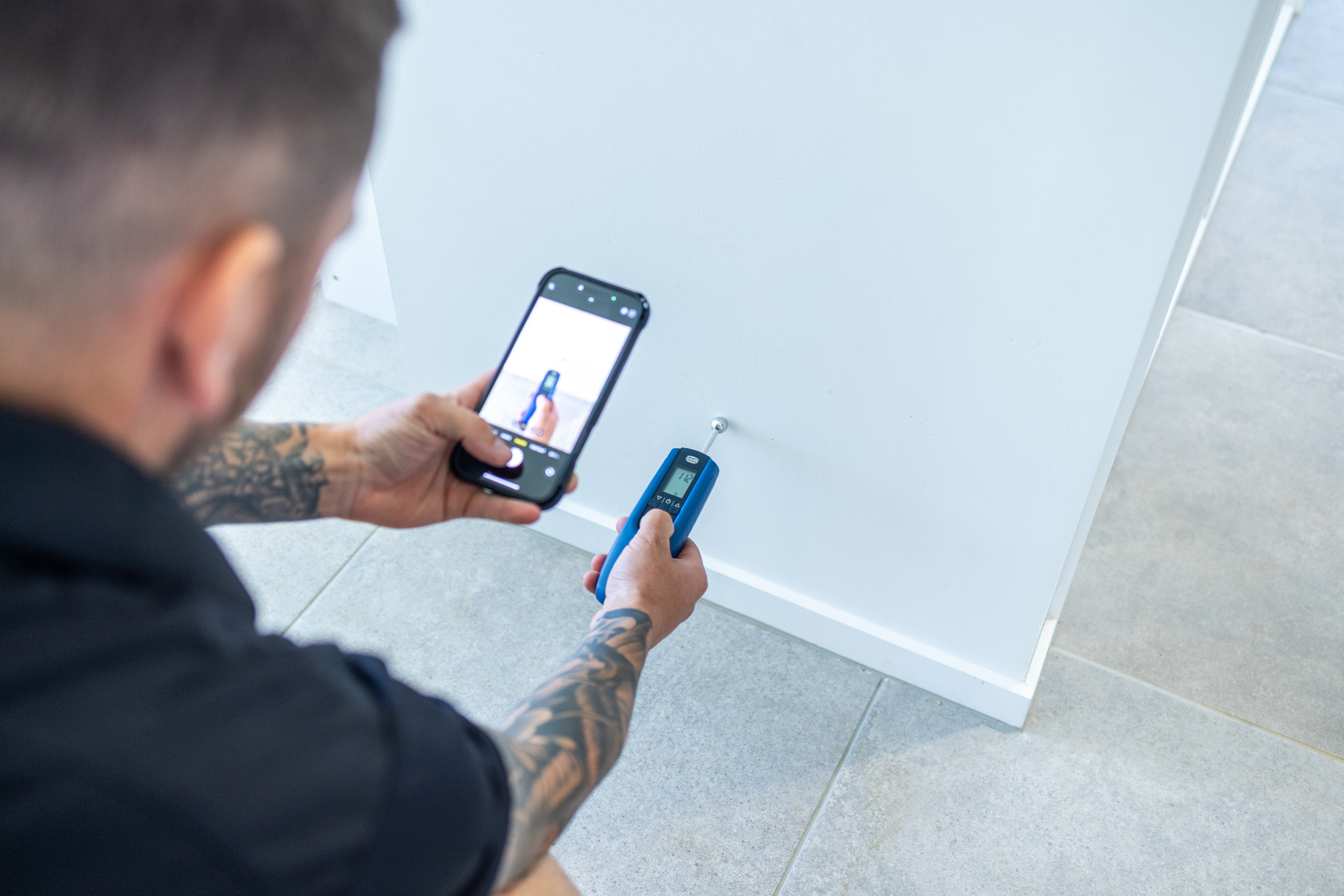
Action: Have a plumber conduct a preventative sweep before the break.
- Condensate & HVAC: Ensure HVAC condensate drains are clear. In high humidity, a blocked drain can cause ceiling units to overflow, destroying office equipment below.
Action: Schedule your final HVAC service for early December. - The Holiday Watch Protocol: Do not rely on perimeter security alone. Arrange for a designated staff member or a specialist partner to inspect the interior of the building every 3-4 days. This resets the unoccupied clock on your insurance policy and ensures any leak is caught before it becomes a disaster.
Forefront is Your Holiday Partner
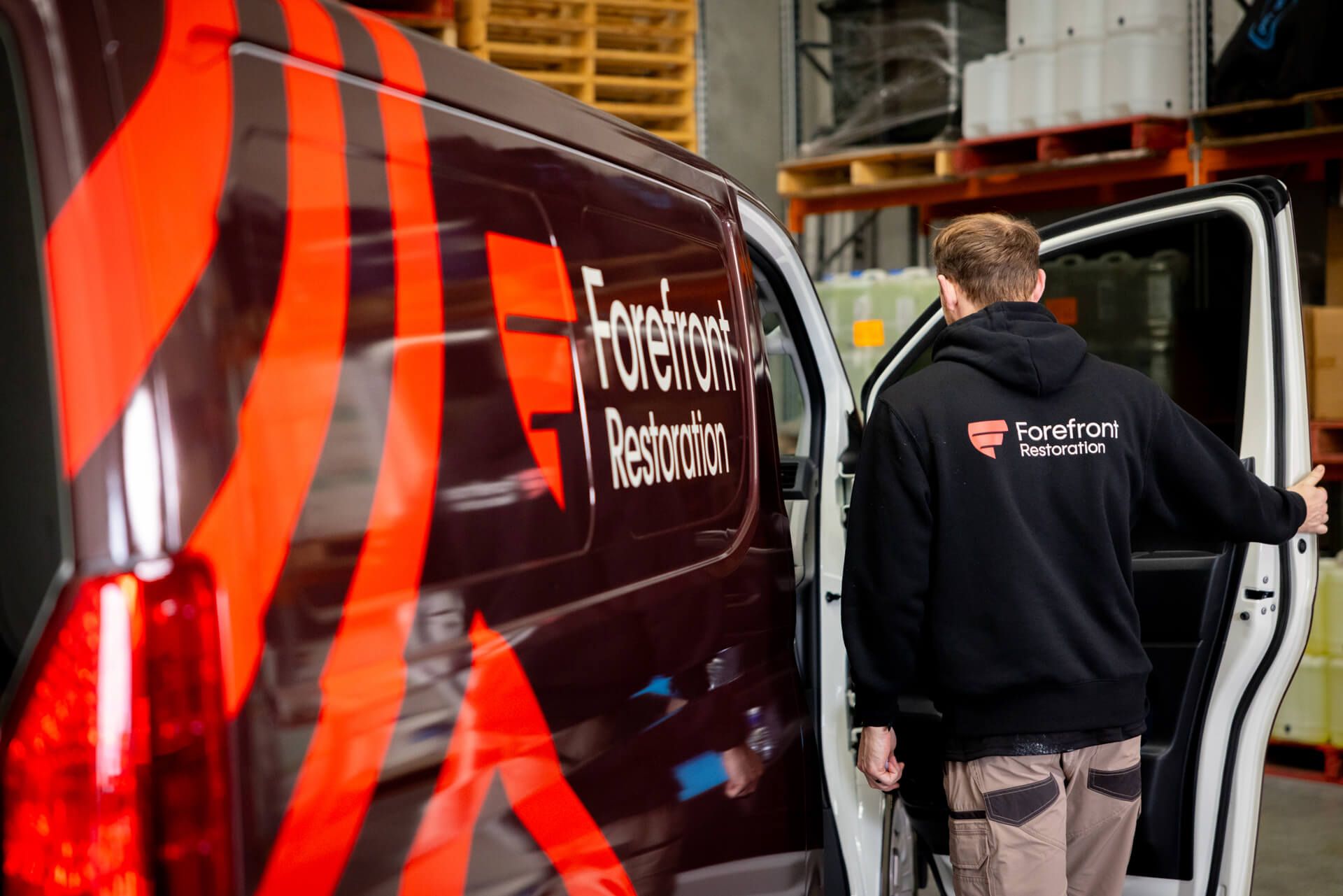
Disasters don’t take a holiday. While your team is recharging, the Forefront Restoration fleet remains on active standby.
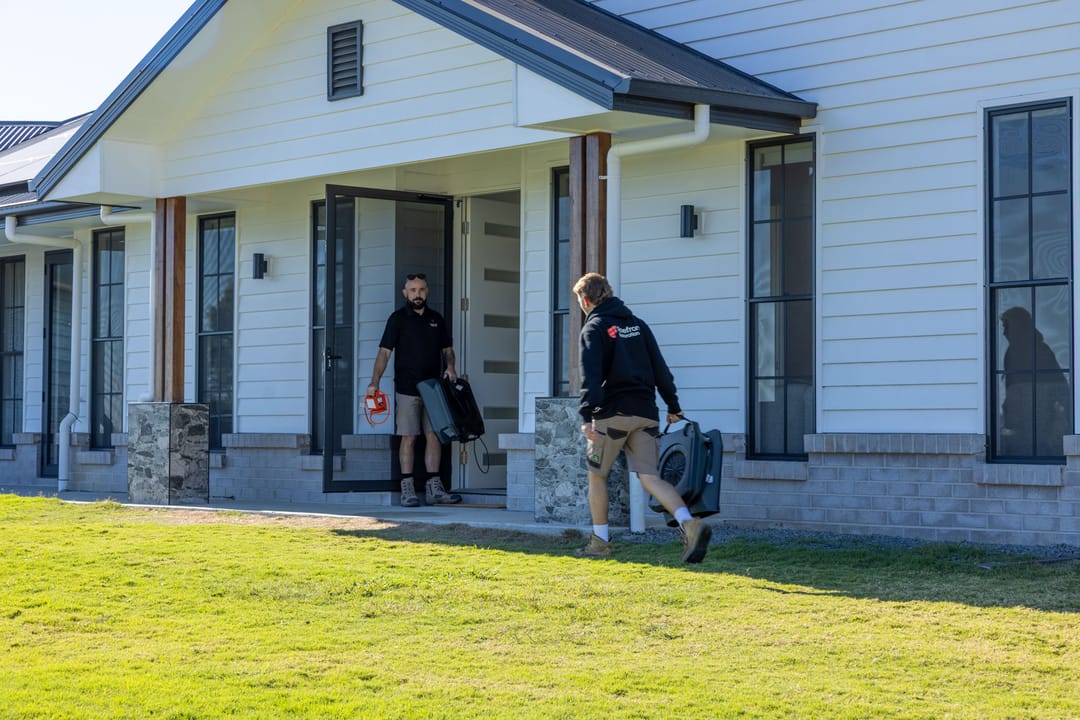
If you need emergency make safe services across South East Queensland, including Brisbane and the Gold and Sunshine Coasts, or Northern New South Wales, we operate 24/7, 365 days a year, including Christmas Day and New Year’s Day. Our teams are ready to respond to any water intrusion alarm, extract standing water, and install drying equipment immediately to prevent a Category 1 leak from becoming a Category 3 mould nightmare.
Save our 24/7 Emergency Number in your phone now: 0738041448
Recent Blogs
Resource Hub
Need technical clarity on your next project? Unlock our team’s frontline expertise at the Forefront Resource Hub. Explore insider articles and download the practical guides you need to act with confidence.