The $349,000 Hour: Calculating the ROI of Rapid Restoration vs. Waiting for Builders
It’s February in Queensland. The storm season has hit, and insurance claims are piling up.
For building owners and Facility Managers, the immediate focus is often on the physical damage: the wet carpet, the soot-stained walls, the damaged stock. However, in the current economic climate, the physical repair bill is rarely the biggest threat to your bottom line.
The real threat is time.
With margins squeezed across every sector, owners cannot afford to be out of action. Yet, with a severe construction labour shortage delaying repairs, the traditional strip-out and replace model is failing.
This month, we explore the economics of restoration and why speed is the ultimate cost control for your business or building insurance claim.
The Cost of Downtime: A Sobering Statistic
When calculating business interruption insurance, many policyholders focus on lost revenue. They forget to factor in the compounding costs of overheads, lost contracts, and reputational damage.
According to the Value of Reliability survey (2023) by ABB, unplanned downtime costs the typical Australian industrial business approximately $349,000 per hour.
While this figure applies to large industrial operations, the principle holds true for every SME. Whether you run a warehouse, a medical centre, or a retail store, every hour your doors are closed bleeds cash.
If a flood event closes your business for two weeks, the cost isn’t just the two weeks of lost sales. It’s the clients who went to a competitor and never came back. It’s the staff you still have to pay. It’s the rent that is still due.
To reduce business downtime, you need a solution that measures recovery in hours, not weeks.
The Velocity Gap: Waiting for Builders
Currently, Queensland is facing a construction labour shortage, with Construction Skills Queensland forecasting a deficit of approximately 50,000 workers by 2026-27.
This has created a Velocity Gap in insurance repairs.
If you choose a traditional builder to handle a water damage claim, their default approach is often to rip it out. They remove the wet gyprock, pull up the flooring, and strip the skirting boards.
Once the demolition is done, you are left with a skeleton. Then, you wait for a carpenter. You wait for a plasterer. You wait for a painter. In the current market, that wait can stretch to 12 weeks or more.
For three months, your business is a construction site. Your average commercial water damage claim cost explodes because the Business Interruption (BI) payout dwarfs the cost of the actual repairs.
The Solution: Restoration Over Replacement
There is a faster way.
At Forefront Restoration, we champion a restoration-first methodology. Instead of demolishing wet materials, we use advanced science to save them.
Structural Drying vs Replacement: Using industrial Desiccant Dehumidifiers and Injectidry systems, we can dry structural materials in place.
- We can dry timber frames through the Gyprock.
- We can save wet concrete slabs.
- We can restore hardwood floors that appear ruined.
By saving the structure, we eliminate the need for reconstruction. We don’t need to wait for a builder because we haven’t demolished the building.
The ROI Calculation:
- Traditional Path: 1 week demo + 12 weeks waiting/rebuild = 13 Weeks Downtime.
- Forefront Path: 1 day setup + 5 days drying = 1 Week Downtime.
Even if the technical drying cost is slightly higher than demolition, the savings on business interruption insurance calculations are massive. We get you back to business 12 weeks earlier.
The Evidence You Need
Insurers love this approach because it saves them money. But they need proof.
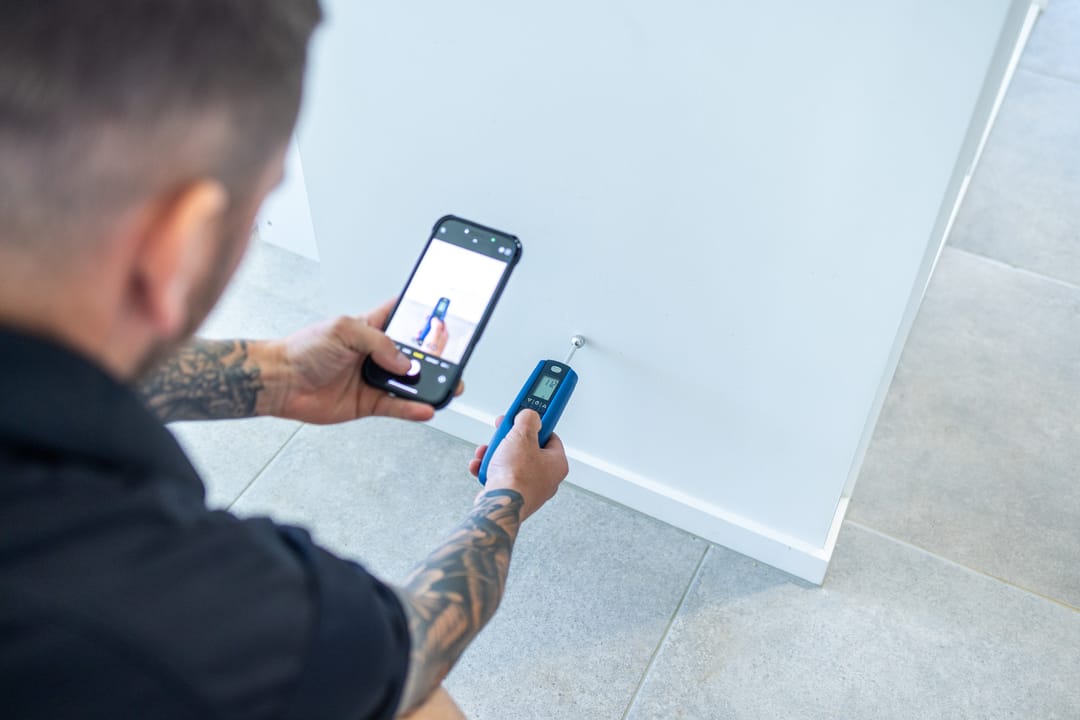
Forefront provides a comprehensive forensic engineering report that insurance adjusters rely on. We don’t just say it’s dry; we prove it with moisture mapping, thermal imaging, and psychrometric data logs. This evidence closes claims faster and prevents disputes.
Stop the Clock on Your Claim
Don’t let a labour shortage dictate your business survival. If you are facing water or fire damage, ask for a Restorability Assessment before you let anyone swing a sledgehammer.
Contact Forefront Restoration today. Speed is your best insurance policy.
Recent Blogs
Resource Hub
Need technical clarity on your next project? Unlock our team’s frontline expertise at the Forefront Resource Hub. Explore insider articles and download the practical guides you need to act with confidence.